
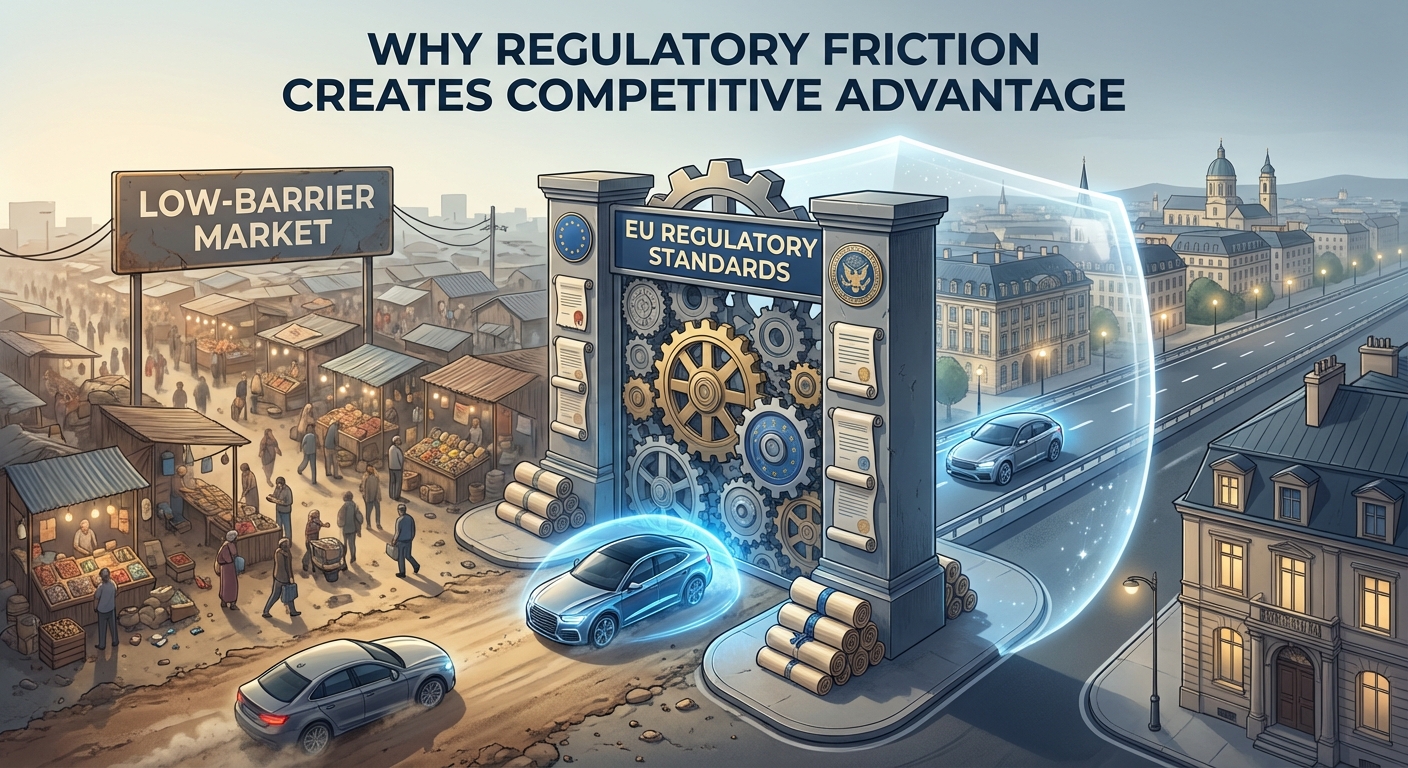
Most U.S. brands look at Europe and see one thing:
Complexity.
More rules.
More documentation.
More compliance.
More moving parts.
And because of that, many brands delay expansion — or avoid it entirely.
But here’s the part most people miss:
Regulatory friction doesn’t weaken a market.
It strengthens it.
Friction Filters Competition
In low-barrier markets, competition floods in quickly.
Anyone can list.
Anyone can test.
Anyone can discount.
The result is often:
- Price compression
- Listing instability
- Aggressive resellers
- Short product life cycles
Europe operates differently.
The compliance requirements — particularly in regulated categories like cosmetics and supplements — create a natural barrier to entry.
And barriers protect those who clear them.
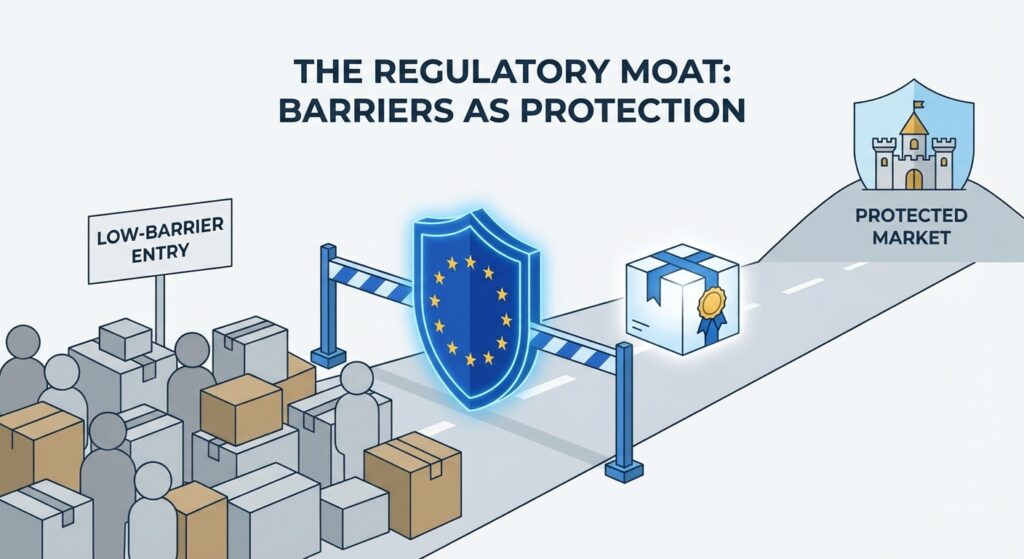
The Moat Effect
When regulatory standards are higher:
- Fewer competitors enter casually
- Fewer listings survive without structure
- Brand ownership matters more
- Documentation becomes leverage
What feels like friction at the beginning becomes insulation over time.
Brands that structure properly don’t just gain access to Europe — they gain protection within it.
Why Serious Markets Reward Serious Brands
European marketplaces reward:
- Structured operators
- Brands with documentation discipline
- Long-term thinking
- Controlled expansion models
They do not reward shortcut behavior.
This creates a different competitive landscape than the U.S., where speed often dominates structure.
In Europe, structure wins.
The Misconception About Risk
Founders often overestimate regulatory risk and underestimate competitive risk.
They think:
“Europe looks complicated.”
But the real question should be:
“Where will competition be easier to defend long term?”
In saturated, low-friction markets, advantage erodes quickly.
In structured markets, advantage compounds.
Friction as Strategy
Regulatory friction forces clarity:
- Clean labeling
- Clear claims
- Documented supply chains
- Defined accountability
That clarity strengthens a brand globally — not just in Europe.
The process of becoming EU-compliant often improves operational discipline overall.
The Strategic Perspective
We don’t view compliance as an obstacle.
We view it as a filter.
The brands willing to approach Europe with structure and long-term intent are the same brands that build durable international positions.
Those who hesitate often do so because they see complexity without seeing the moat it creates.
The Real Opportunity
Europe is not attractive because it’s easy.
It’s attractive because it isn’t.
And in markets that require commitment, commitment becomes advantage.