
When U.S. brands think about expanding into Europe, the focus usually lands on the same marketplaces:
Germany, France, Italy, and Spain.
And for good reason — they are the largest Amazon marketplaces in the EU.
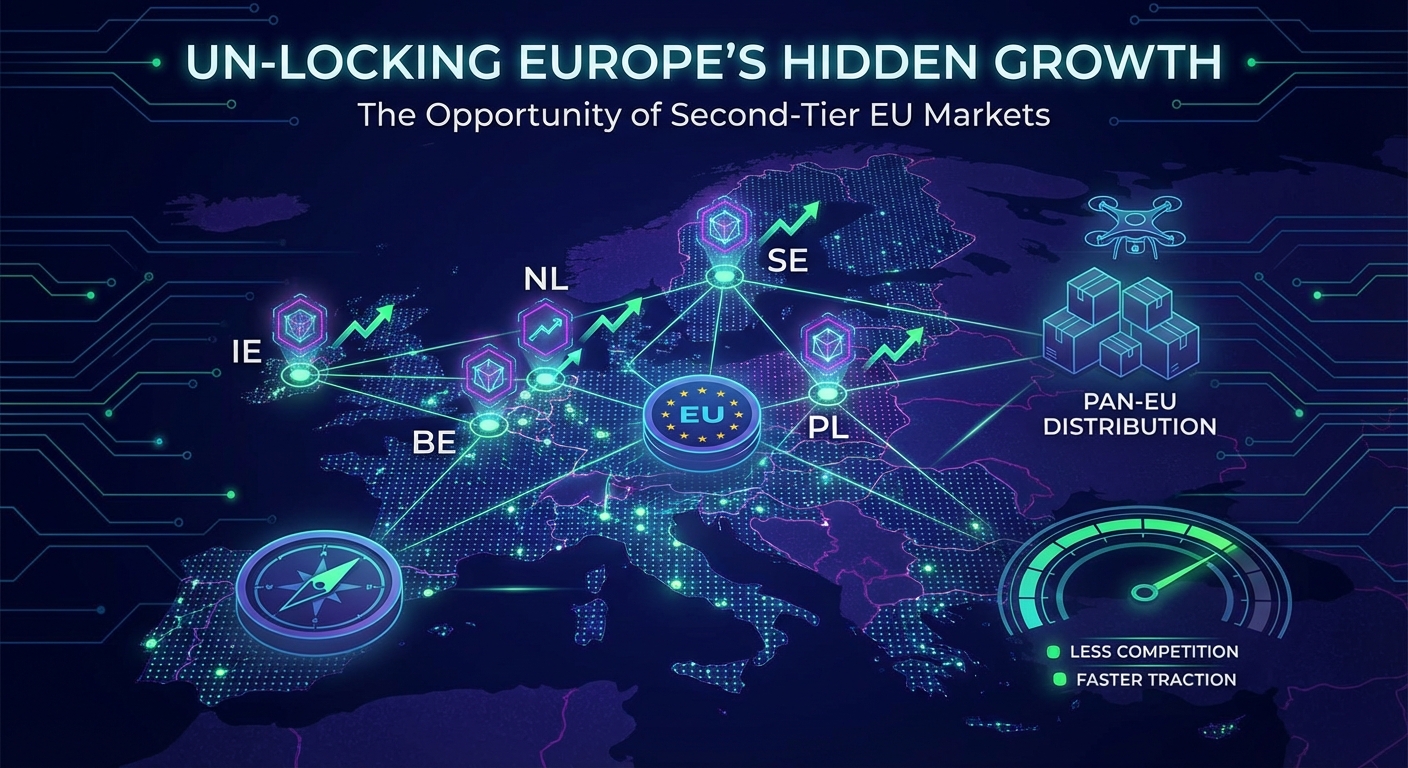
But what many brands overlook is that some of the most attractive growth opportunities in Europe exist in what we call the “second-tier” EU markets.
These include countries such as:
- Netherlands
- Sweden
- Poland
- Belgium
- Ireland
While smaller in population, these marketplaces often offer something equally valuable:
Less competition and faster traction for well-positioned brands.
The Competitive Gap
The U.S. Amazon marketplace is one of the most competitive ecommerce environments in the world.
By contrast, many EU marketplaces still have:
- Lower seller density
- Fewer highly optimized listings
- Less aggressive price competition
In practical terms, this means strong brands often gain visibility faster in these markets than they would in larger ones.
For brands expanding internationally, this competitive gap creates meaningful opportunity.
Smaller Market, Higher Efficiency
It’s easy to assume that smaller markets equal smaller opportunity.
But in many cases, these markets provide more efficient growth.
Countries like the Netherlands and Sweden often show:
- High online shopping adoption
- Strong purchasing power
- Consumers comfortable buying international brands
With fewer sellers competing for attention, quality listings and strong brand positioning can perform extremely well.
How Pan-EU Distribution Unlocks These Markets
One of the advantages of Amazon’s European infrastructure is that brands don’t have to approach each country as a completely separate expansion.
With the right fulfillment structure, inventory can be positioned across Europe, allowing local delivery to customers in multiple countries.
This means a brand that initially launches in major markets can quickly reach consumers in places like Belgium, Sweden, or Poland without building a separate operational system for each.
The result is broader reach with relatively low incremental complexity.
Why These Markets Matter Strategically
The second-tier EU marketplaces often become important growth accelerators.
They help brands:
- Diversify revenue across multiple countries
- Capture demand that competitors may overlook
- Build early presence before markets become saturated
Over time, these markets can represent a meaningful portion of a brand’s European revenue.
The Takeaway
Most brands look at Europe through the lens of its largest marketplaces.
But some of the most efficient growth opportunities exist just beyond them.
The brands that expand successfully in Europe aren’t only thinking about the biggest markets — they’re thinking about the entire regional ecosystem.
And often, the quieter markets become the most rewarding ones.