
One of the biggest surprises U.S. brands face when entering Amazon UK and Europe is this:
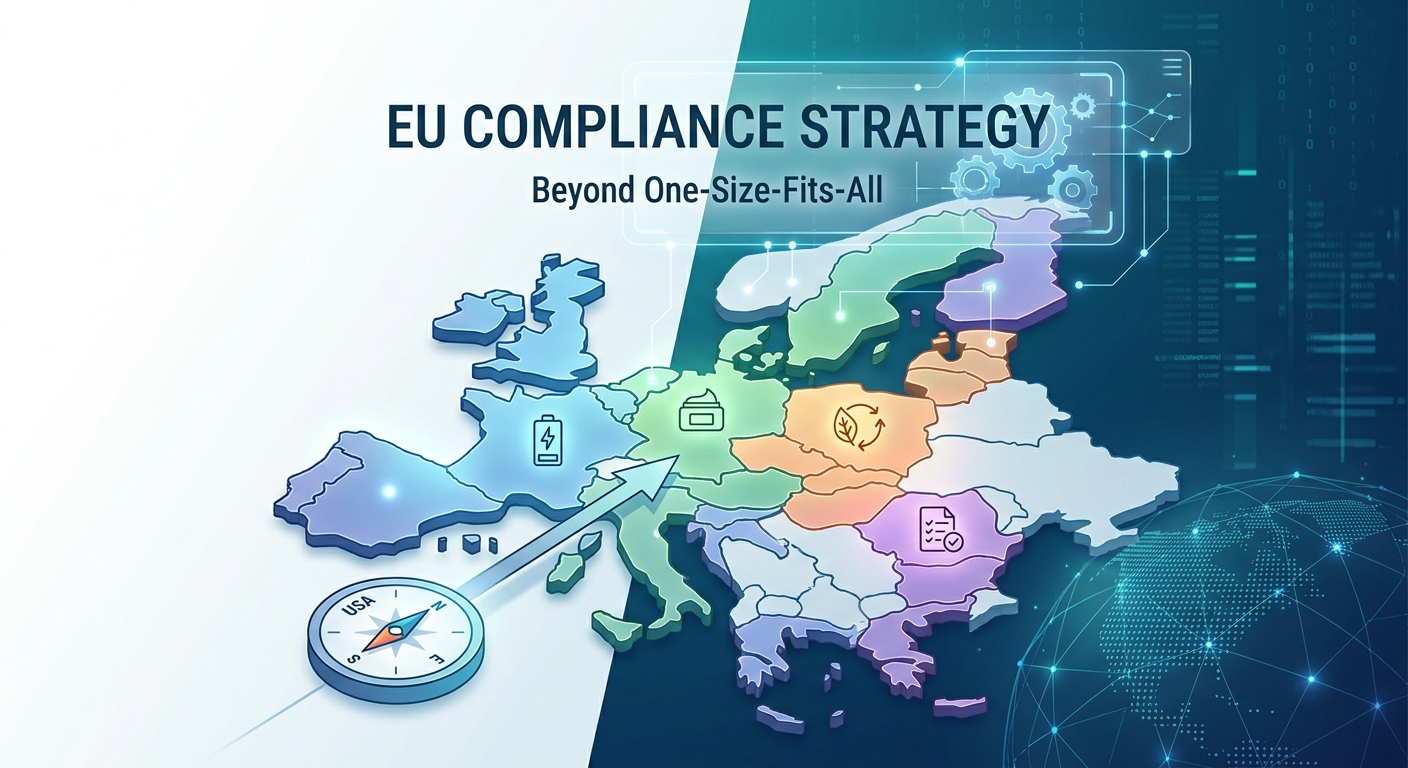
Europe is not one compliance environment.
Many brands assume that once documentation is completed for one country, they are ready for all of Europe.
In reality, each marketplace can introduce different requirements depending on the product category, materials, packaging, and local regulations.
What works in one country may still require additional documentation in another.
This is one of the reasons EU expansion becomes operationally complex very quickly.
The Challenge: Country-Specific Requirements
As brands expand across European marketplaces, they often discover that compliance is not only product-based — it is also country-based.
Examples include:
Cosmetics & Personal Care Products
Cosmetic products commonly require:
- Product safety documentation
- Responsible Person setup
- CPNP registration and notifications
- Label review and local compliance checks
A cosmetic product that is accepted in one market still needs the proper regulatory structure to operate across Europe.
Battery Products
Products containing batteries often require additional documentation depending on marketplace and country requirements.
This may include:
- Battery compliance documentation
- Safety reports
- Labeling confirmations
- Packaging declarations
Battery-related products frequently receive additional review on Amazon due to regulatory sensitivity.
Packaging & Environmental Requirements
Some countries place additional focus on:
- Plastic packaging registrations
- Packaging waste reporting obligations
- Environmental compliance programs
- Recycling and extended producer responsibility (EPR) requirements
Brands often discover these obligations only after launch.
Material & Product-Specific Certifications
Depending on the product category, countries may request:
- Material declarations
- Safety certificates
- Product testing reports
- Category-specific compliance documents
Requirements vary significantly between categories.
A wellness product, cosmetic item, electronic accessory, and household product may all follow different compliance paths.
The Hidden Risk: Reactive Compliance
Many brands approach EU compliance reactively.
The pattern usually looks like this:
Launch → Amazon request → Document scramble → Delay.
This creates:
- Listing interruptions
- Inventory delays
- Internal workload increases
- Slower expansion timelines
By the time the issue appears, products may already be live or inventory already positioned.
Why Operational Management Matters
The challenge is not only obtaining documents.
The challenge is managing:
- Different countries
- Different product categories
- Different Amazon requirements
- Changing regulations over time
As brands scale across Europe, compliance becomes an operational function — not a one-time task.
This is why many brands struggle managing EU expansion internally.
The Need for an Operating Partner
Successful EU expansion usually requires more than logistics support.
It requires an operational structure that manages:
- Compliance coordination
- Marketplace requirements
- Documentation tracking
- Regulatory changes
- Country-by-country needs
Because Europe does not operate as a single system.
It operates as multiple markets under one regional opportunity
How BrandRite Global Supports This
At BrandRite Global, we help brands navigate the operational side of EU expansion.
This includes:
- Compliance coordination
- Country-specific requirement management
- Amazon documentation readiness
- Cosmetic compliance pathways
- Packaging and marketplace obligations
- Ongoing operational oversight
Our role is not only to help brands enter Europe.
It is to bring structure, stability, and clarity to an environment that can otherwise become fragmented.
The Takeaway
EU expansion is not simply about translating listings and shipping inventory.
Each country may introduce different requirements depending on:
- Product type
- Packaging
- Materials
- Category regulations
The brands that succeed are not the ones that react faster.
They are the ones that build the right operational foundation from the beginning.
And in Europe, that foundation matters.